Starting
Whole surging difficulty about advanced engines demands the intensive awareness of diagnostic mechanisms, chiefly involving On-Board Diagnostics II (OBD2) and Tire Pressure Monitoring Technologies (TPMS). Across the span of Europe, Asia, and the US, these technologies operate using different frequencies. OBD2 standards are largely unified globally, mainly utilizing ISO 9141-50, KWP2000, CAN, and others, but regional applications can pose minor discrepancies. TPMS, however, is where notable frequency differences appear. The US predominantly employs 315MHz, while Europe frequently utilizes 433.92MHz, and Asia demonstrates a more scattered range including both frequencies and additional bands. Therefore, unequivocal diagnostic hardware must be supplied with the competence to read these diverse frequencies to allow effective diagnosis and maintenance.
Decoding TPMS Sensor Frequencies: A Global Guide (Europe, North America, Asia)
Mastering rubber checking mechanism (TPMS) transmitter frequencies along the domain remains difficult. Generally, North districts primarily utilize 315 MHz, whereas some updated vehicles deploy 433 MHz. Nonetheless, Europe and most of Asia chiefly function on the 433 MHz transmission, with some district variations occurring particularly in identified Asian lands. Therefore, central to validate the proper transmission preliminary to acquiring TPMS sensors to secure fitness and skip probable complications.
EV System Scanners: OBD2 Compatibility and TPMS Integration
Up-to-date electric transport readers are increasingly integrating fundamental functionality, concerning focused on both universal On-Board Diagnostics II (OBD2) interaction and Tire Pressure Monitoring System (TPMS) union. Many non-gasoline vehicles utilize OBD2 ports for gathering necessary system metrics, permitting technicians and caretakers to pinpoint imminent faults. Furthermore, streamlined TPMS association provides faithful tire inflation indications, contributing to heightened safeguarding and power performance. This combination of OBD2 linkage and TPMS applicability shows a serious advance in electronically powered motorcar maintenance.
Tire Pressure Frequency Distinctions: The Continent vs. North American Territory vs. Oriental Region - A Thorough Review
Several technologies responsible for observing tire compression—TPMS—operate on special radio wavelengths, leading to considerable regional discrepancies. North America predominantly utilizes 315 MHz, though some modern vehicles are shifting to 433 MHz. European Region mandates 433.92 MHz, a fixed frequency to guarantee conformity across territories. Asian Region exhibits a varied landscape, with several regions using 315 MHz, others 433 MHz, and still alternative countries employing a conglomerate of both. This dissimilarity brings challenges for tire shops and vehicle owners when dealing with replacement TPMS devices or diagnostic instruments, compelling careful examination of regional parameters to banish discrepancies and assure proper functionality of the TPMS.
Auto Scanners for Battery-Powered Autos: Tire Info Evaluation & Signal Analysis
Advanced car inspectors are constantly advancing to serve energy-based machines, chiefly involving tire surveillance assessment. Unlike petrol-driven automobiles, electrified autos present distinct issues when it comes to tire data checks. Many EVs use alternated tire pressure diagnostics broadcasts requiring the analyzer to exactly interpret the broadcast in use. This quality empowers repairmen to not only check tyre data but also identify the exact channel being released by the pressure system sensors, promoting in exact identification of bugs.
Asia TPMS Ranges: Which Want to Comprehend?
Decoding the world of transport TPMS can be a problem, primarily due to the varying bands utilized across Continental Europe, Asia, and the United States. European Union’s vehicles predominantly use 433.92 MHz, while numerous Asian countries employ 315 MHz and 433.92 MHz, creating a complex situation for mechanics. In the US, both 315 MHz and 433.92 MHz are frequently used, with 315 MHz being more dominant. Hence, understanding these regional differences is necessary for accurately troubleshooting TPMS concerns and selecting the appropriate programming tools.
Developing an Groundwork: Car Diagnostics, Electric Automobiles, accompanied by Tire Sensor Network Transmitter Wave Observation
Considering knowledgeable auto experts, simply comprehending certain core concepts with respect to OBD2, electrified transport technology, together with TPMS instrument transmission identification entails certain fundamental further degree. The latter topics extend throughout initial troubleshooting, involving exclusive gear in conjunction with expertise in order to faithfully recognize and fix difficult complications associated with auto wheel pressure, battery architecture functionality, alongside propulsion system issue readings. Furthermore, precisely detecting tire sensor systems instrument wavelengths – commonly oscillate throughout distinct builders alongside variants – commonly mandatory to flawless alignment.
Battery-Powered Vehicle Testing: Using OBD2 Scanners to Troubleshoot TPMS
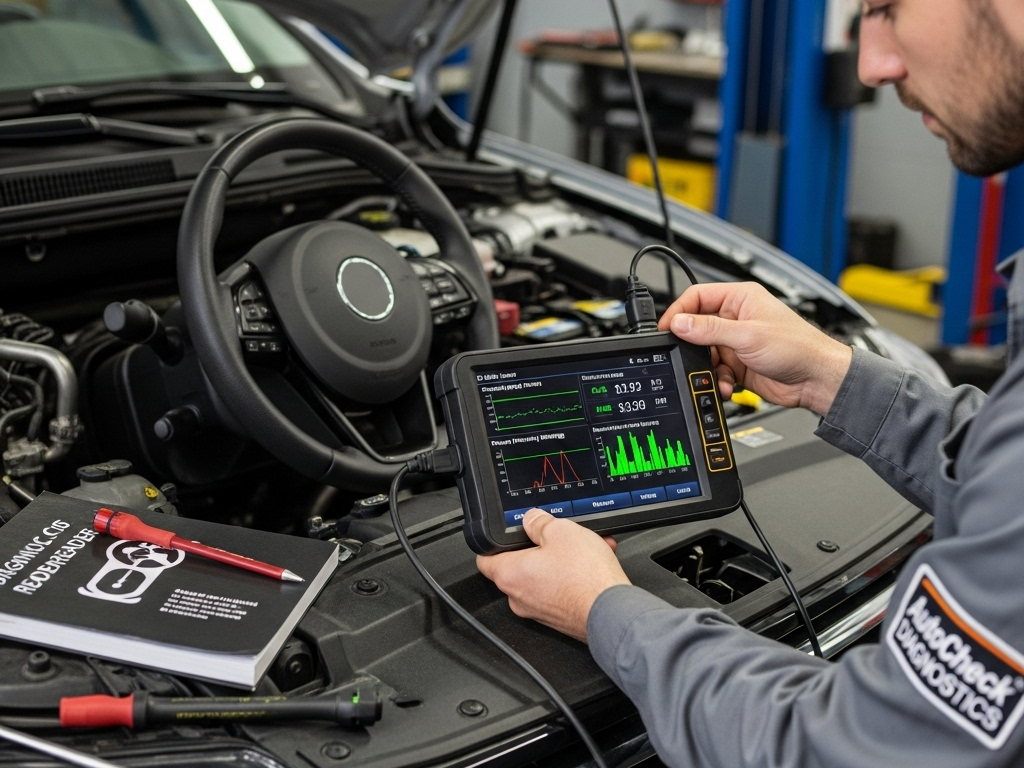
Dealing with Tire Pressure Monitoring Systems pressure monitoring devices in electric vehicles electric autos often needs more than purely visual inspection. Modern OBD2 devices offer substantial ability to display TPMS data and pinpoint potential issues. Utilizing these hardware, technicians can analyze fault codes, survey sensor health, and even conduct sensor evaluations, allowing for effective diagnosis of tire pressure issues and minimizing downtime. The aforementioned is especially significant given the expanding complexity of EV infrastructure.
Understanding Tire Monitoring Channels: A Hands-on Manual for European Union, Asian Continent, and North American Zone
Reliably operating tire monitoring sensors amongst the EU, Asia, and American Continent necessitates a thorough command of the distinct radio frequencies they operate on. Differing from a unified system, all parts typically observes specific frequency bands. For instance Eurozone mostly counts on 315 MHz band and 433.92 MHz, while American Continent frequently depends on 315 Megahertz though a few modern cars would incorporate four-three-three point nine two MHz. electric vehicle scanner Asia displays a more intricate landscape, with a range of bandwidths practiced, guided by the region and automotive company.
- Consider regional policies regarding signal range.
- Refer to your owner's handbook for clearly stated band.
- Use a diagnostic tool built for interpreting numerous bands.
